Lead Generation Services in India: Strategies, Costs and Results
Many Indian businesses have had this experience: they pay for ads or hire an agency and get a flood of enquiries. The phone calls turn out to be wrong numbers, tyre-kickers or people who never answer. A lead is only worth paying for if it can become a customer.
This guide explains how lead generation services in India work, which strategies suit which type of business, what they cost in rupees, and how to judge results honestly before you commit.
What Are Lead Generation Services?
Lead generation services help a business attract people who have shown interest and capture their contact details so the sales team can follow up. A good service usually covers:
- Choosing channels (Meta Ads, Google Ads, SEO, WhatsApp, email)
- Creating the offer, ad creatives and landing pages
- Setting up lead capture and tracking
- Optimising campaigns based on lead quality, not just volume
- Reporting on leads, cost and, ideally, customers
Note what is not on that list: closing the sale. The agency generates the enquiry. Your team still has to respond fast and sell.
The Short Answer: What Does It Cost?
Costs have three parts:
| Cost component | What it covers | Typical form |
|---|---|---|
| Ad spend | Money paid to Meta, Google or other platforms | Paid directly to the platform; scales with your goals |
| Service fee | Strategy, setup, management, reporting | Monthly retainer, setup fee, or performance-based |
| Supporting costs | Landing pages, creatives, CRM, WhatsApp tools | One-time or monthly |
Many businesses compare agency fees and forget the ad spend, which is usually the larger number. A cheap fee with a tiny ad budget will not produce volume, and a large ad budget with a weak setup burns money.
What does a lead cost?
Indian agencies publish very different figures, and these are self-reported, so treat them as rough signals only:
| Business type | Reported range per lead (INR) | What drives the range |
|---|---|---|
| Local and consumer services | Roughly ₹250 – ₹1,500 | City, competition, offer strength |
| B2B services | Often several thousand rupees | Decision-maker targeting, deal size |
| High-ticket products or services | Higher still | Intent level, lead qualification |
Your own number depends on your offer, location, pricing, creative quality and follow-up speed. A cheap lead is not a good lead. A lead priced far below the usual range for your category should make you ask who is actually filling the form.
Lead Generation Strategies That Work in India
Pick two or three channels that suit your offer. Trying to run six at once splits the budget and the attention.
1. Meta Ads (Facebook and Instagram)
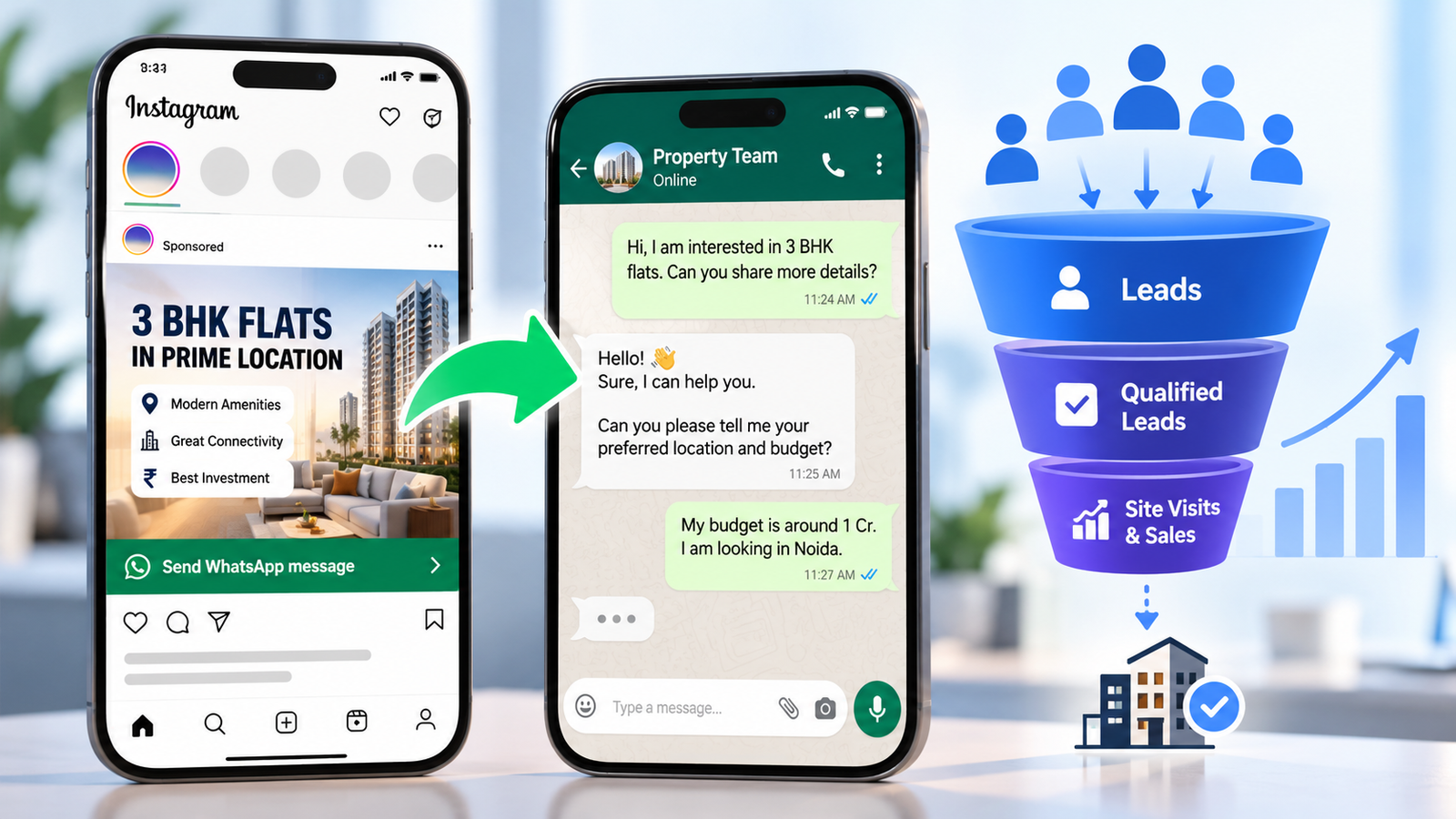
Meta works well when people may not be searching yet but would respond to a good offer: coaching, clinics, real estate, D2C products, local services. You can collect leads inside the platform with instant forms, or send people to a landing page or WhatsApp.
- Strength: reach, visual storytelling, lower cost per lead for many consumer categories.
- Watch out for: lower-intent leads. Add a qualifying question or two to the form.
2. Google Ads (Search)
Google captures people who are already searching for what you sell, such as “dentist near me” or “ERP software cost.” Intent is higher, and so is the cost per click.
- Strength: high-intent enquiries.
- Watch out for: broad keywords that waste budget. Use specific, commercial phrases and add negative keywords.
3. Landing pages
A landing page is a single page built for one offer and one action. Ads that send people to a homepage lose enquiries. A strong landing page has a clear headline, proof, a short form, a visible WhatsApp or call button, and fast loading on mobile.
4. SEO and local SEO
SEO builds a lead source whose cost per lead tends to fall over time, but it takes months, not weeks. For local businesses, an optimised Google Business Profile, service pages and reviews matter a great deal.
5. WhatsApp follow-up
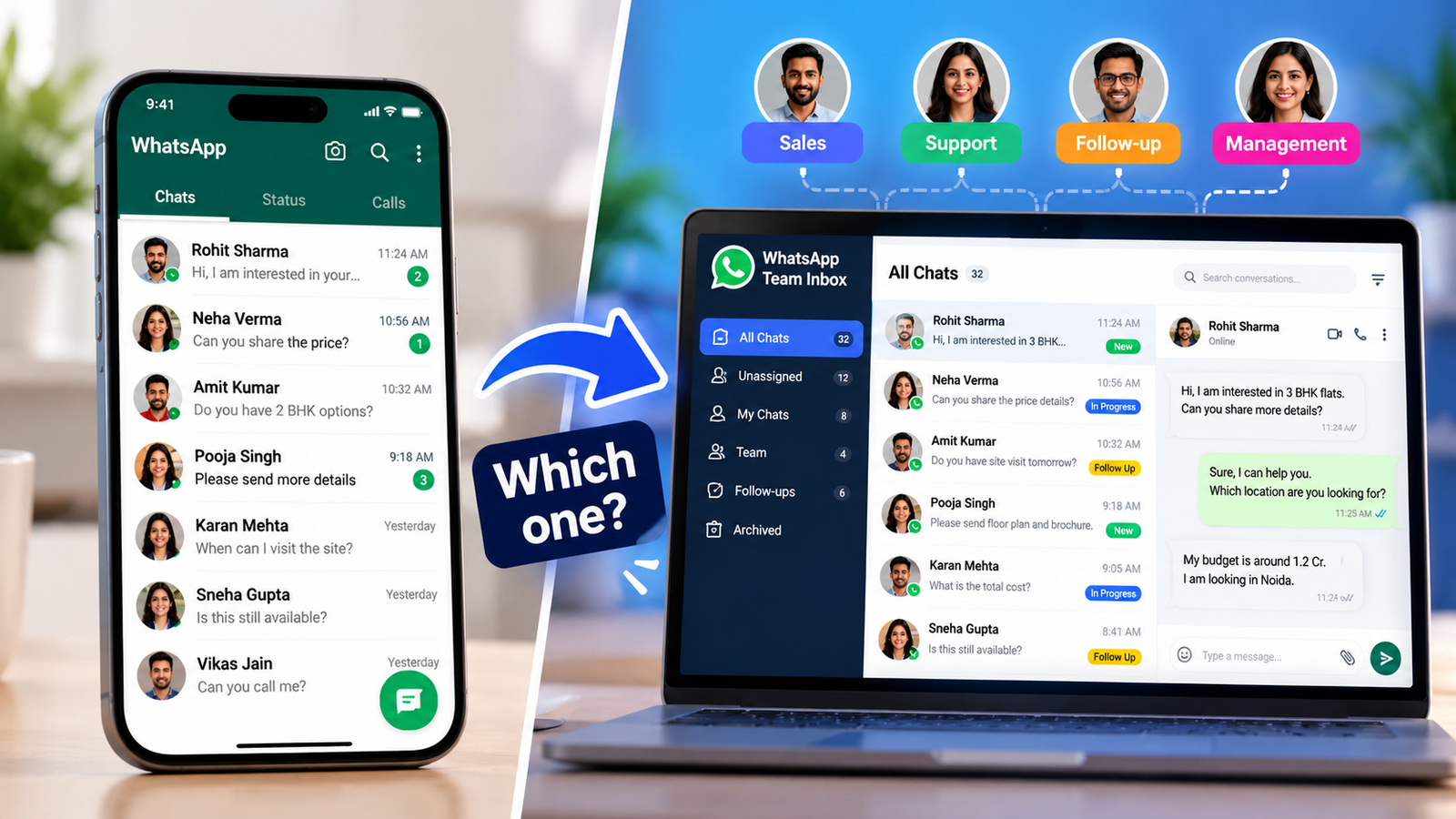
In India, many customers prefer WhatsApp to email or calls. A click-to-WhatsApp button and a prompt, polite first reply can lift response rates. Use it with consent and avoid spamming.
6. Retargeting
Most visitors do not enquire on the first visit. Retargeting ads remind them later and often bring in leads at a lower cost than cold traffic.
Which channel should you start with?
| Your situation | Sensible starting point |
|---|---|
| Local service, people search for it | Google Ads + Google Business Profile |
| D2C or lifestyle offer | Meta Ads + landing page |
| High-ticket B2B | Google Ads + LinkedIn or outreach + a strong landing page |
| Tight budget, long-term view | Local SEO + content, with a small ad test |
Pricing Models: Retainer, Pay-Per-Lead or Hybrid
| Model | How it works | Good for | Watch out for |
|---|---|---|---|
| Monthly retainer | Fixed fee for management; ad spend paid separately | Ongoing campaigns and optimisation | Make sure reporting shows lead quality |
| Pay-per-lead | Fee per lead delivered | Predictable volume, simple offers | Lead definition: who decides what is “qualified”? |
| Hybrid | Lower retainer plus performance element | Shared risk | Clear terms on what triggers the bonus |
| One-time setup | Campaign build and handover | Teams with in-house marketers | No ongoing optimisation |
No model is automatically best. Whichever you choose, define a “qualified lead” in writing before you start.
How to Budget: Work Backwards From Customers
Don’t start with “I’ll spend ₹30,000.” Start with what you need.
- Decide how many new customers you want each month.
- Estimate your close rate: what share of qualified leads become customers.
- Estimate what share of raw leads are qualified.
- Multiply by your expected cost per lead to get the ad budget.
Worked example (hypothetical, for illustration only)
| Step | Assumption | Result |
|---|---|---|
| Target new customers | 10 per month | — |
| Close rate on qualified leads | 20% | 50 qualified leads needed |
| Share of leads that qualify | 50% | 100 raw leads needed |
| Assumed cost per lead | ₹500 | ₹50,000 ad spend |
These are made-up numbers to show the method, not a benchmark or a client result. Swap in your own figures. If the maths says you need a budget you cannot afford, improve your offer, close rate or lead qualification first.
What “Results” Should You Realistically Expect?
Be wary of anyone who promises a fixed number of leads. Lead volume depends on your offer, price, location, competition and how fast you respond. What an honest agency can promise is a process.
Metrics that matter, in order of importance:
- Cost per customer (the one that decides profit)
- Cost per qualified lead
- Qualified lead rate
- Cost per lead (useful, but easily gamed)
- Click-through rate and landing page conversion rate (diagnostic only)
Realistic timeline:
- Weeks 1–2: setup, tracking, creatives, landing page.
- Weeks 2–6: testing offers, audiences and keywords. Costs usually fluctuate.
- Month 2 onwards: optimisation based on real lead quality.
- SEO: expect months before it becomes a steady source.
Actual speed varies by industry and competition.
The Part Agencies Can’t Control: Your Follow-Up
A large share of “bad leads” are good leads that were contacted too late. Before you spend on ads:
- Assign someone to respond within minutes during working hours.
- Use a short, human first message, not a wall of text.
- Record each lead’s status in a sheet or CRM so you know what happened to it.
- Tell the agency which leads turned into customers, so they can optimise for those.
Collecting Leads Responsibly: Consent and Data
India’s Digital Personal Data Protection Act, 2023 and the DPDP Rules notified in November 2025 set expectations around clear notice, consent, security and deletion. Implementation is phased, so confirm the current dates with a qualified adviser.
Practical steps for lead forms:
- Say plainly what data you collect and why.
- Collect only what you need.
- Get clear consent before sending marketing messages, including on WhatsApp.
- Keep a way for people to withdraw consent.
- Ask your agency where lead data is stored and who can access it.
How to Choose a Lead Generation Agency: Checklist
Ask these questions before signing:
- Can I see the ad account and own it? (You should own it.)
- How do you define and measure a qualified lead?
- Which channels would you start with for my business, and why?
- How is conversion tracking set up (Pixel, Google tag, forms, calls, WhatsApp)?
- What is included in the fee, and what is not?
- What does ad spend look like, and who controls it?
- How often will I get reports, and what will they show?
- What happens if lead quality is poor?
- What is the contract length and exit process?
Red flags:
- Guaranteed lead numbers or guaranteed sales
- Very low cost per lead with no explanation of quality
- No access to your own ad account
- No tracking, or reports with only impressions and clicks
- Pressure to sign long contracts before any test
Common Mistakes to Avoid
- Judging campaigns by cost per lead alone
- Running ads to a homepage instead of a focused landing page
- Skipping tracking, so you can’t tell what works
- Changing offers and creatives every few days, which prevents learning
- Ignoring follow-up speed
- Expecting SEO results in two weeks
A Practical Starting Plan
- Pick one clear offer, such as a free consultation or a limited-time package.
- Build one fast, mobile-friendly landing page with a short form and a WhatsApp button.
- Launch one channel that matches your customers’ behaviour.
- Track leads, qualified leads and customers in a simple sheet.
- Review after a few weeks and keep what works.
- Add a second channel only when the first is stable.
Need help turning ad spend into qualified enquiries?
ICONICMONEY helps businesses improve their digital marketing through Meta Ads, Google Ads, landing pages and lead generation strategy. Get in touch to discuss your goals and explore a strategy suited to your business.
CTA Button Text: Get a Free Lead Generation Audit
Conclusion
Lead generation services in India can work well when the offer is strong, the tracking is clean and the follow-up is fast. Judge any provider by cost per qualified lead and cost per customer, not by the number of leads alone.
Start with one or two channels, define a qualified lead in writing, budget backwards from the customers you want, and review results honestly. That approach protects your budget and gives you data to improve on.
D. FAQ section
Frequently Asked Questions
1. How much do lead generation services cost in India?
Costs combine the service fee, ad spend and supporting tools. Fees vary by agency and scope, and cost per lead varies by industry, city and offer. Ask for a written breakdown of all three parts.
2. What is a good cost per lead in India?
It depends on your category and deal size. A better question is whether your cost per customer is profitable. Compare it to what a customer is worth over time.
3. Is pay-per-lead better than a monthly retainer?
Not automatically. Pay-per-lead gives predictable volume but needs a strict definition of a qualified lead. A retainer suits continuous optimisation. Some businesses prefer a hybrid.
4. Which is better for lead generation: Meta Ads or Google Ads?
Google Ads reaches people already searching, so intent is often higher. Meta Ads reaches people who may respond to a good offer before they search. Many businesses test one first and add the other.
5. How long does it take to get leads from ads?
Campaigns can generate enquiries within days of launch, but stable, qualified lead flow usually needs several weeks of testing and optimisation. SEO takes longer.
6. Can a lead generation agency guarantee sales?
No. An agency can run campaigns and optimise them, but sales also depend on your price, product, follow-up and competition. Be cautious of guarantees.