Why Are Your Facebook Ads Not Generating Leads? 15 Common Reasons
You are spending money on Facebook ads every day. Impressions are coming in and maybe even clicks, but your phone is not ringing and your inbox is empty.
The short answer: Facebook ads usually fail to generate leads because of problems in one of four places: tracking, delivery, creative and offer, or conversion and follow-up. Rarely is “Facebook doesn’t work” the real reason.
In this guide, you will learn the 15 most common causes, how to tell which one is hurting you, and what to fix first.
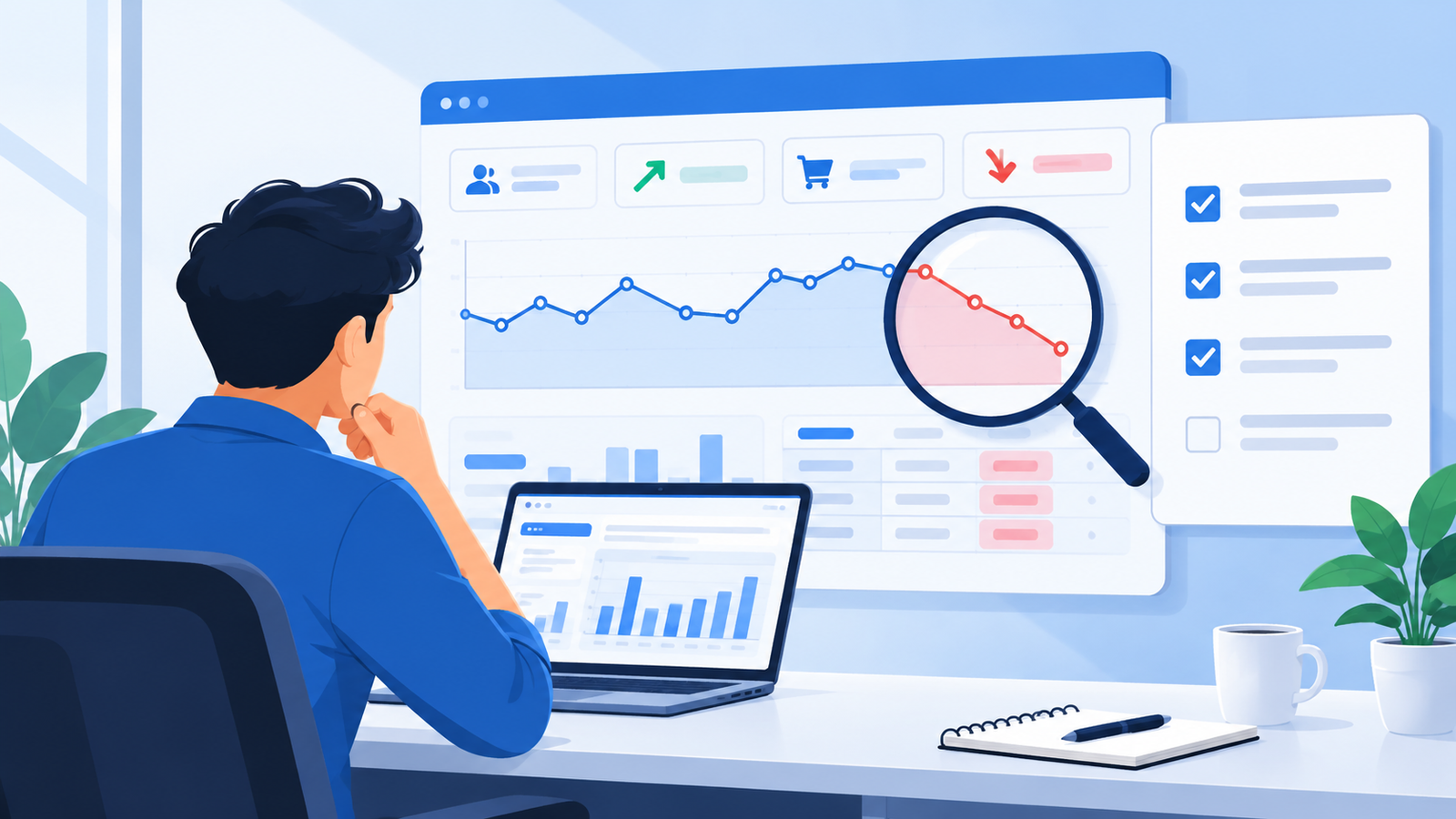
First, Find the Broken Layer (Quick Diagnosis)
Before changing your ad, match your symptom to the likely layer:
| What you see | Likely layer | Start with reasons |
|---|---|---|
| Very low impressions, “Learning Limited”, spend not happening | Delivery | 3, 4, 12, 13 |
| Impressions but very low clicks | Creative & offer | 5, 6, 7, 11 |
| Good clicks but no form fills or messages | Conversion | 8, 9 |
| Leads come, but are fake, cold, or never buy | Lead quality & follow-up | 9, 10, 14, 15 |
| Dashboard shows zero or odd results | Tracking | 1, 2 |
Layer 1: Tracking and Setup
1. You chose the wrong campaign objective
If you optimise for traffic or engagement, Meta finds people who click or like, not people who enquire. For lead generation, use the Leads objective, or Sales if you are optimising for website conversions. Match the optimisation event to your real goal.
2. Your tracking is broken or incomplete
If the Meta Pixel or lead event is not firing correctly, you may be getting leads but not seeing them, or Meta may not know what a “good result” looks like. Check that:
- The Pixel is installed on the thank-you or confirmation page
- The Lead (or Contact/WhatsApp click) event fires only once per real enquiry
- You have set up the Conversions API where possible, since browser-only tracking can miss events
Test every form submission yourself before spending more.
Layer 2: Delivery and Budget
3. Your ad set is stuck in “Learning” or “Learning Limited”
Per Meta’s guidance on the learning phase, an ad set generally needs around 50 optimisation events in about 7 days to stabilise. If it cannot reach that, it can stay in “Learning Limited,” where results are often less stable and costs can be higher. Splitting a small budget across too many ad sets is a common cause. Fewer, better-funded ad sets usually learn faster.
4. Your budget is too low for your cost per lead
Here is a simple way to sanity-check it. This is an illustrative calculation, not a benchmark:
If your target cost per lead is ₹250, then 50 leads a week needs about ₹12,500 per week, or roughly ₹1,800 per day for that ad set.
If your daily budget is ₹300, the platform will struggle to gather enough data. Either raise the budget, reduce the number of ad sets, or optimise for an earlier funnel event while you build volume.
5. Your targeting is too narrow, too broad, or aimed at the wrong person
Very tiny audiences limit delivery. Totally unfocused audiences waste spend on people who will never buy. Define who actually buys: city or service area, income level, business type. Then let creative and offer do the filtering. For local businesses in India, tight geography (a city or a radius) usually matters more than layered interests.
Layer 3: Creative and Offer
6. Your creative does not stop the scroll
The first 2–3 seconds decide everything. Weak creative looks like a generic stock photo, a logo-only image, or a long paragraph on a plain background. Stronger creative shows the problem, the result, or a real person or product in context. Test multiple hooks, not just multiple colours.
7. Your offer is unclear or not compelling
“We offer digital marketing services” is not an offer. “Free 20-minute ad account audit for Delhi-based clinics” is. Ask yourself:
- What exactly does the person get?
- Why should they act now?
- Is the next step easy and low-risk?
Even a perfect ad cannot rescue a vague offer.
8. Your landing page is slow, confusing, or mismatched
If your ad promises one thing and the page says another, people leave. Common issues:
- Slow loading on mobile data (most Indian users browse on phones)
- No clear headline matching the ad
- Too many menu links and distractions
- No visible form, WhatsApp button, or call button above the fold
Build a dedicated landing page for each campaign instead of sending traffic to your homepage.
9. Your lead form is too long, or too easy
Both extremes hurt. A long form reduces submissions. A one-tap instant form can produce a flood of low-intent leads. Balance it:
- Ask only what you need to qualify (name, phone, city, one qualifying question)
- Use higher-intent form options where available, and add a question that filters out non-buyers
- Confirm the number format so you do not collect unreachable phone numbers
Layer 4: Lead Quality and Follow-Up
10. You respond too slowly
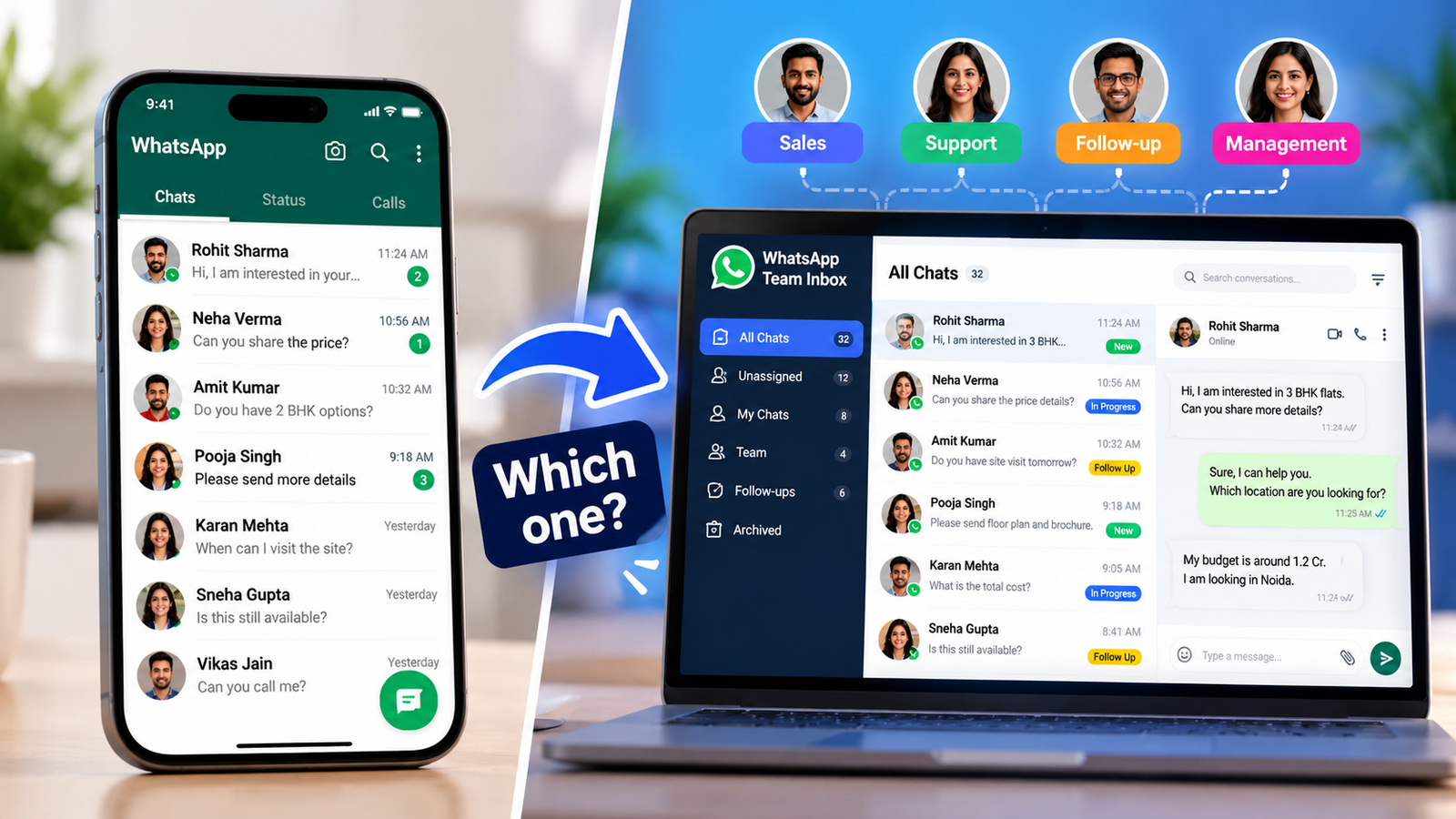
A lead who filled your form at 11 a.m. and gets a call at 6 p.m. has probably already enquired elsewhere. Set up instant WhatsApp or SMS acknowledgements, assign someone to call quickly, and track response time.
11. Ad fatigue has set in
When the same people see the same ad repeatedly, clicks drop and costs rise. Watch frequency and click-through rate. Refresh creatives on a regular schedule, and keep a bank of new angles ready.
12. You keep editing the campaign
Meta treats some changes as “significant edits,” which can restart learning. Changing budgets drastically, targeting, or optimisation events every day stops the system from stabilising. One caution: some advertisers have tested whether simply adding one new ad resets learning, and their results suggest the behaviour may not be as strict as the old help article says (for example, Jon Loomer’s test). Treat this as something to test on your own account, not a rule to assume.
13. Your ad account has delivery or policy issues
Check for rejected ads, restricted ad accounts, failed payments, or an unverified business. Sometimes ads are “Active” but not actually delivering. Look at the Account Quality and Delivery notes in Meta’s tools.
14. You are judging too early, or with the wrong metric
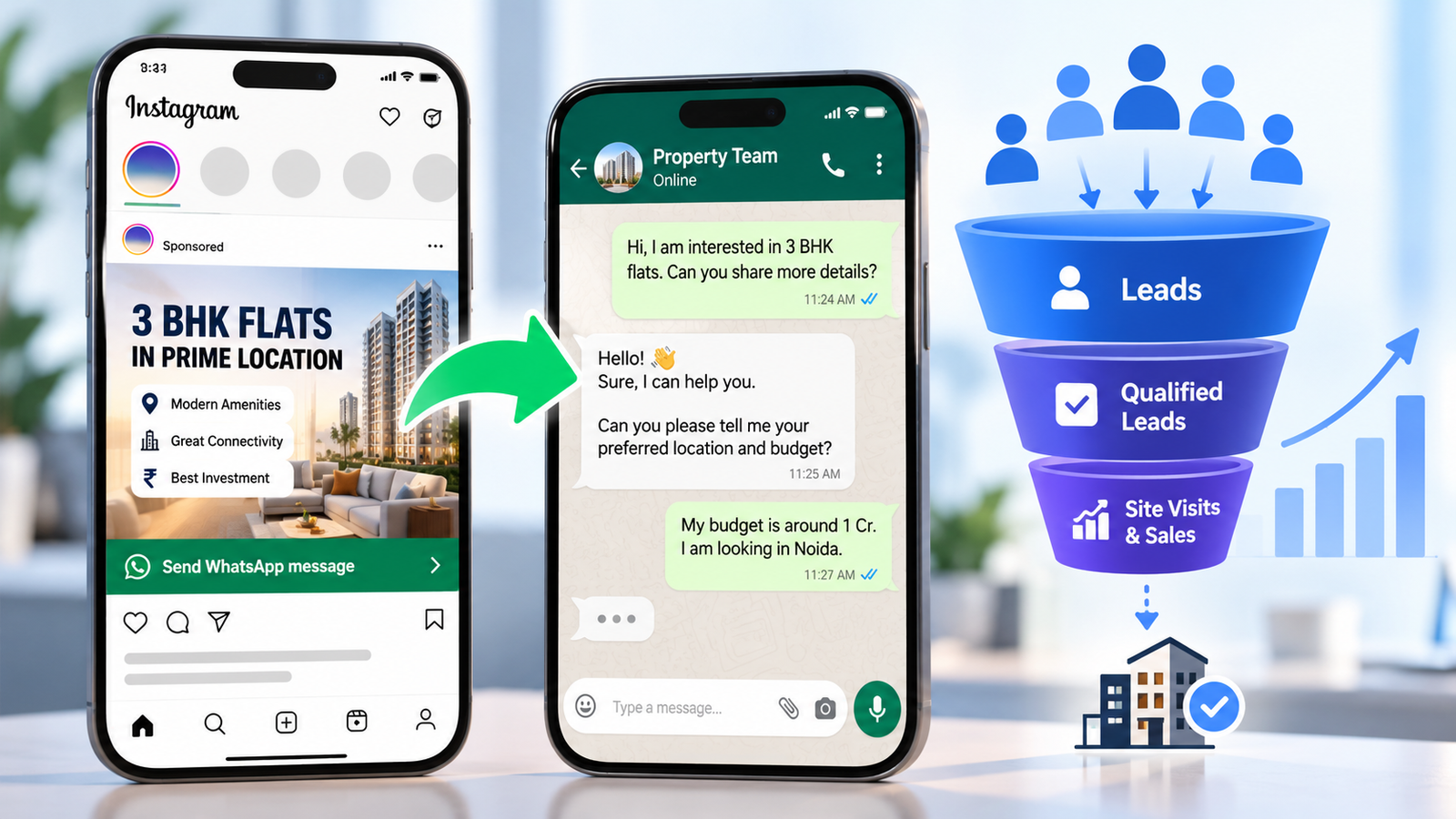
Looking at results after one day, or judging only by cost per lead, can mislead you. A ₹150 lead who never answers is worse than a ₹400 lead who buys. Define the metrics that matter: cost per qualified lead, cost per appointment, and cost per sale. Give campaigns a fair testing window before big decisions.
15. There is no feedback loop between sales and ads
If your sales team never tells the marketer which leads were good, the ad account keeps optimising for cheap leads. Share lead outcomes weekly. Even a simple Google Sheet marking leads as “qualified / not reachable / not interested / converted” helps you choose creatives and audiences that bring real customers.
Your 10-Minute Fix Checklist
Work through this in order:
- Confirm the objective and optimisation event match your goal.
- Submit a test lead and confirm it appears in Meta and your CRM or sheet.
- Check delivery status: Learning, Learning Limited, rejected, or restricted.
- Compare your daily budget with your target cost per lead.
- Reduce the number of ad sets if each is underfunded.
- Review the offer in one sentence. Is it clear?
- Open your landing page on a phone, on mobile data.
- Review the form length and lead quality.
- Check how fast leads are contacted.
- Look at frequency and creative age. Plan new creative.
Realistic Expectations
Good lead generation is a process of testing creatives, offers, and audiences, then improving. Results depend on your industry, offer, competition, budget, and follow-up quality. Be cautious of anyone who guarantees a specific number of leads or a fixed cost per lead.
Need help with Facebook ads that are not generating leads? ICONICMONEY helps businesses improve their digital marketing through Meta Ads, Google Ads, and lead generation strategy. Get in touch to discuss your goals and explore a strategy suited to your business. [Request a Free Audit]
D. FAQ Section
How long should I wait before deciding Facebook ads are not working?
Avoid judging after one or two days. Meta’s learning phase generally looks at about a week of data, and ad sets that gather too few events may stay unstable. Review after a fair testing window, and only change what the data points to.
Why are my Facebook ads getting clicks but no leads?
This usually points to a landing page, form, or offer problem rather than an ad problem. Check page speed on mobile, message match between the ad and the page, form length, and whether tracking is firing correctly.
How much budget do I need for Facebook lead ads in India?
It depends on your industry and cost per lead. A useful method: multiply your target cost per lead by about 50 and divide by 7 to estimate a daily budget per ad set that gives Meta enough data. Start with the lead cost your business can afford, not a random number.
Why are my Facebook leads fake or low quality?
Common causes are overly simple instant forms, broad targeting, vague offers, and no qualifying question. Add one filter question, confirm phone numbers, and share lead outcomes with your ad manager so optimisation improves.
Should I use Facebook lead forms or a landing page?
Both can work. Instant forms are quick and mobile-friendly but can bring lower-intent leads. Landing pages take more effort but allow stronger messaging and tracking. Test both for your offer.
Can an agency fix my Facebook ads?
An agency can audit tracking, structure, creative, and lead quality, and help you test faster. No honest agency can guarantee fixed results, because outcomes depend on the offer, market, budget, and your follow-up process.