How to Generate Quality Leads Through Facebook and Instagram Ads
Most Indian businesses can get leads from Facebook and Instagram ads. The real problem is getting quality leads: people who answer the phone, live in your service area, and are ready to buy.
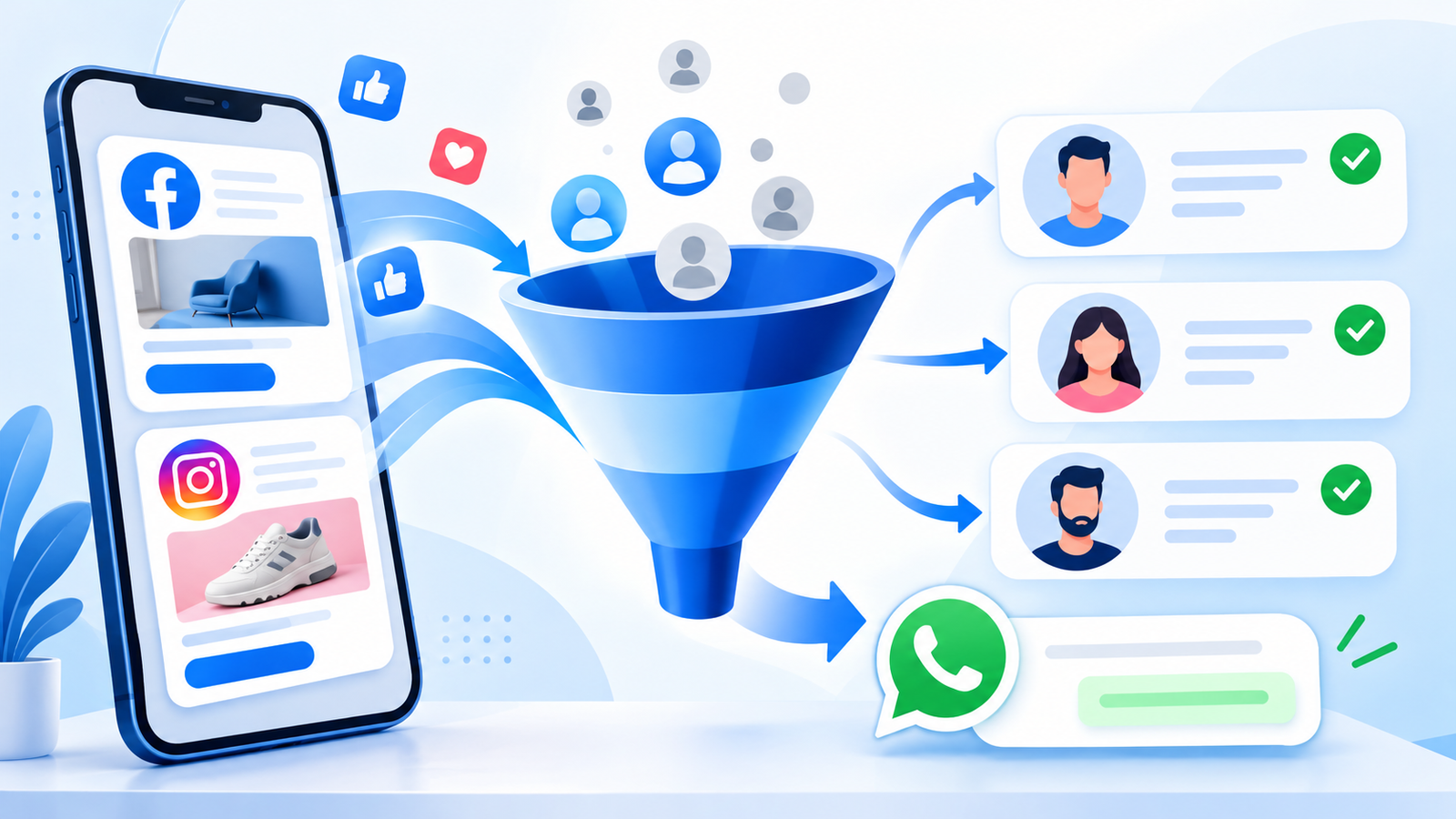
The short answer: You generate quality leads through Facebook and Instagram ads by combining four things: a specific offer, a lead form that filters, tracking that teaches Meta what a good lead looks like, and fast follow-up on WhatsApp or phone. Skip any one of these and you will usually get cheap leads that never convert.
This guide shows you how to do it step by step, with simple frameworks and INR examples for Indian businesses.
What Are Quality Leads?
Quality leads are enquiries that match your ideal customer and can realistically become sales. A simple way to judge them is the 3R check:
- Reachable: The phone number works and the person responds.
- Relevant: They live in your city or service area and need what you offer.
- Ready: They have the budget and the intention to decide soon.
If most of your leads fail the first R, you do not have a campaign problem alone. You have a quality leads problem that starts with your form, offer, and tracking.
Why Quality Leads Matter More Than Cheap Leads
A ₹100 lead who never answers is more expensive than a ₹400 lead who books a visit. Always compare cost per qualified lead, not just cost per lead.
Illustrative example, not a benchmark: If you spend ₹20,000 and get 100 leads, your cost per lead is ₹200. If only 10 of them are qualified, your cost per qualified lead is ₹2,000. A different campaign with 40 leads at ₹500 each but 20 qualified gives ₹1,000 per qualified lead, which is better.
Step 1: Set Your Goal and Cost Ceiling
Work backwards from the value of a customer. This is an illustrative calculation:
If you can spend up to ₹3,000 to win one customer and about 1 in 10 leads becomes a customer, your maximum cost per lead is about ₹300.
Write down your target cost per qualified lead, how many leads your team can handle each week, and the areas you serve. These numbers guide every decision that follows.
Step 2: Choose How You Will Collect Leads
Facebook and Instagram ads can collect leads in three main ways:
| Method | Best for | Watch out for |
|---|---|---|
| Instant Form | Fast, mobile-first enquiries for local services, coaching, clinics | Low-intent submissions if the form is too easy |
| Landing page | Higher-priced services and stronger qualification | Lower volume; slow pages lose people |
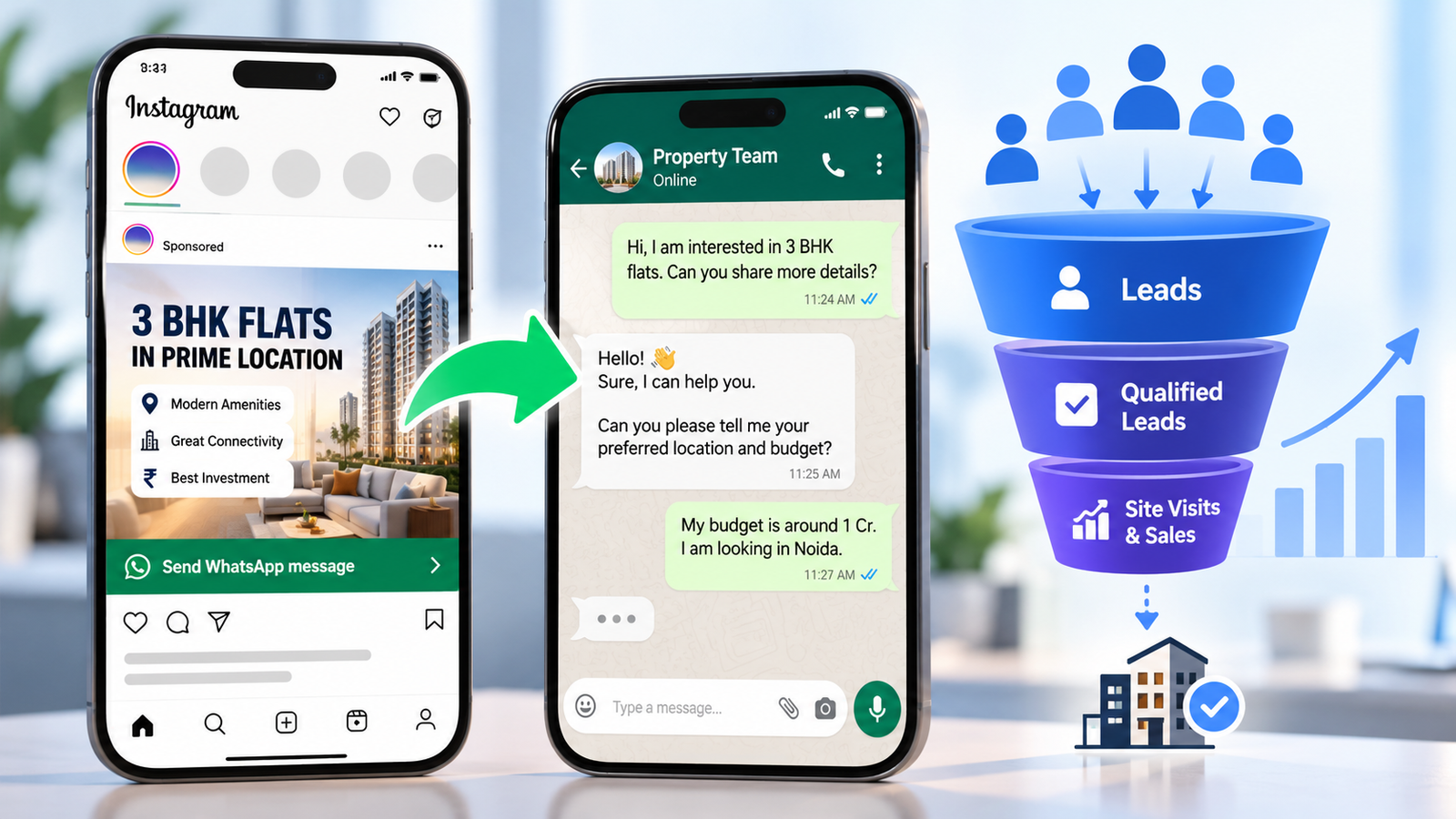
| WhatsApp or Instagram DM | Businesses that close on chat | Needs quick replies or chats go cold |
Many Indian service businesses test an Instant Form against a landing page and judge both on how many quality leads each one brings, not just on cost per lead.
Step 3: Set Up Your Campaign for Quality Leads
Pick the Leads objective. Use Sales only if you are optimising for purchases on a website.
Test Advantage+ leads campaigns. Meta has described this as an automated setup designed to find higher-quality leads, and reported average improvements of about 14% lower cost per lead and 10% lower cost per qualified lead. These are Meta’s own figures, so treat them as a reason to test, not a promise.
Optimise for quality, not just volume. Meta now offers goals aimed at people more likely to become customers. For Instant Forms, industry coverage says this may need customer outcomes sent back through the Conversions API for CRM. Check your own Ads Manager for current options.
Keep the structure simple. A few well-funded ad sets learn faster than many tiny ones. Avoid changing budgets and targeting every day.
Step 4: Build Lead Forms That Filter
Your form is a filter that decides whether you attract quality leads or random clicks.
- Ask for name, phone, city, and one or two qualifying questions.
- Use a higher-intent form option where available. It adds a review step, which usually reduces volume but improves lead quality.
- Consider phone verification. Meta has announced an SMS verification option for lead forms, so check if it is available for your account.
- Add one question that separates serious buyers from browsers.
Copy-and-adapt qualifying questions:
| Business type | Question |
|---|---|
| Coaching institute | Which course are you interested in? When do you plan to join? |
| Clinic or wellness | Which treatment do you need? Preferred visit date? |
| Interior or renovation | What is your approximate budget? Which city and area? |
| Digital services | What is your monthly marketing budget? What is your main goal? |
| E-commerce (bulk or B2B) | How many units do you need? Delivery city? |
Every extra field lowers submissions, so ask only what helps you qualify.
Step 5: Create Ads That Attract Quality Leads
Your ad is the first filter. A vague ad attracts everyone. A specific ad attracts the right people.
- Hook fast: Name the problem or result your buyer wants in the first 2–3 seconds.
- Be specific: Mention the city, price range, or who the offer is for. “Free demo class for Class 10 students in Delhi” beats “Join now”.
- Use real proof only: Real reviews, results, and work you can back up.
- Set expectations: Tell people what happens after they submit, such as “We will call you within the day.”
- Test formats on both platforms: Short Reels-style videos, single images, and carousels work differently on Facebook and Instagram. Write in the language your audience uses, including Hindi or Hinglish where it fits.
Step 6: Match Your Landing Page to the Ad
If you send people to a website, give them one clear action. A page built for quality leads keeps the headline consistent with the ad, loads fast on mobile data, shows the form or WhatsApp button without scrolling, and removes extra menus. If you need a conversion-focused page, see our website design and development services.
Step 7: Track the Leads Meta Cannot See
Meta can only optimise toward what it can measure, so tracking decides whether the system learns to find quality leads or just more leads.
- Install the Meta Pixel and confirm that your Lead event fires once per real enquiry.
- Set up the Conversions API so server-side events cover what browsers miss.
- Where possible, send back lead outcomes such as qualified, booked, or sold.
Without this step, campaigns tend to drift toward cheap leads that look good in reports but do not buy.
Step 8: Follow Up Fast
Speed often decides who wins the customer, especially when you are competing for the same quality leads as other local businesses.
- Send an instant WhatsApp or SMS acknowledgement.
- Call within a fixed time window and track it.
- Use a simple script: confirm the need, location, and budget, then book the next step.
- Mark each lead as Not reachable, Not relevant, Interested, Booked, or Sold.
That last step is your feedback loop. It shows which ads bring quality leads and gives you the outcome data for Step 7.
Step 9: Measure the Right Numbers
| Metric | Why it matters |
|---|---|
| Cost per lead | Basic efficiency, but easy to misread |
| Cost per qualified lead | Your real cost of getting quality leads |
| Contact rate | Share of leads who actually answer |
| Booking rate | How sales-ready the leads are |
| Cost per customer | The number that decides profit |
| Frequency and CTR | Early warning for ad fatigue |
Review weekly. Do not judge a campaign after one or two days.
Step 10: Improve and Scale Carefully
- Replace weak creatives first, since they often move results the most.
- Increase budgets gradually instead of sudden jumps.
- Keep winners running and test new angles beside them. Judge each change by the quality leads it adds, not by lead count.
- Add retargeting for people who visited but did not enquire, once you have enough traffic.
- If your budget is small, run one focused campaign and improve it before building a complex funnel.
If you want a second opinion on your setup, you can request a free marketing audit.
Common Mistakes That Hurt Lead Quality
- Chasing the lowest cost per lead
- Using forms that are too easy or too long
- Skipping the Conversions API and lead feedback
- Calling leads hours or days later
- Sending ad traffic to a general homepage
- Changing targeting and budgets daily
- Promising results you cannot guarantee
Realistic Expectations
Getting quality leads takes testing, and results depend on your offer, industry, competition, budget, and follow-up. Expect a testing period before performance stabilises. Be cautious of anyone who guarantees a fixed number of leads or cost per lead. You can find more practical guides on the ICONICMONEY blog or learn about our team and approach.
Need help getting quality leads from Facebook and Instagram ads? ICONICMONEY helps businesses improve their digital marketing through Meta Ads management and lead generation strategy. Get in touch to discuss your goals and explore a strategy suited to your business. Request a Free Audit
D. FAQ Section
How do I get quality leads from Facebook and Instagram ads?
Use a specific offer, a form with qualifying questions, tracking through the Pixel and Conversions API, and fast follow-up. Then judge campaigns by cost per qualified lead, not only cost per lead.
Are Instant Forms or landing pages better for lead generation?
Instant Forms are quick on mobile but can bring lower-intent leads. Landing pages give more control and better tracking but usually lower volume. Test both and compare qualified leads.
Why are my Facebook and Instagram leads low quality?
Common causes are very easy forms, vague ads, optimising only for volume, no phone verification, and slow follow-up. Add a qualifying question and send lead outcomes back to Meta.
How much should I spend on lead generation ads in India?
Divide the most you can pay per customer by your lead-to-customer rate to get a cost-per-lead ceiling, then budget enough for steady data. Costs vary by industry, so avoid copying someone else’s numbers.
What is an Advantage+ leads campaign?
It is Meta’s automated campaign setup for lead generation. Meta has reported lower average cost per lead and per qualified lead, but your results will vary, so test it against your current setup.
How long does it take to see results?
Plan for at least a few weeks of testing before judging patterns. Early days are noisy, so avoid big changes before you have enough data.